More than putting your brand on a box
Packaging design is more than putting your brand on a box
Packaging is often one of the first physical interactions somebody has with a brand. They might see it lined up alongside ten competitors on a shelf. It might arrive through their letterbox after an online order. They might pick it up to work out what a product is, how to use it or whether it's right for them.
And they make those judgements quickly. NIQ's current packaging research suggests shoppers typically look at a product for around 13 seconds before making a decision(NIQ).So packaging design needs to do considerably more than carry your logo.
Start with the product, not the finish
Foil, embossing, die cuts and tactile papers can produce beautiful results, but they're not where we start, but first we need to understand what the packaging actually has to do.
Where will the product be sold; online, offline, gift shops, supermarkets, clinics?
What will sit beside it?
How does somebody choose between variations?
What information needs to be immediately visible?
Does it need to survive being posted?
Does the customer need to open, reseal or store it?
What information is legally required?
The answers affect everything from format and hierarchy to materials and production and that is particularly important when we're designing a product range rather than a solo item. A system that works beautifully across three products needs to be capable of working across ten if that's where the business is heading.
Design for where the product actually lives
We love a packaging mockup at Studio Creates! However, a packaging mock-up viewed full-screen on a laptop is very different from a product sitting on a crowded retail shelf. Strong packaging needs enough visual difference to stand out amongst a crowd, while making it easy for somebody to understand what they're looking at.
That doesn't necessarily mean making everything bigger, brighter or louder — it’s often more subtle than this. Our job is to understand the category, the customer and the environment, then we’ll make deliberate decisions about hierarchy, typography, imagery, colour, format and the information competing for attention.
Recent academic research from Nature backs up that complexity, in their systematic review of packaging and purchase-intention the research identified visual and structural design, product expectations, information communication and sustainability among the core themes influencing how packaging performs (Nature).
The clever bit often happens before anything gets printed
Choosing between an off-the-shelf box and a bespoke format.
Working out whether a label can achieve what you need without manufacturing an entirely new container.
Understanding what your printer can produce.
Considering quantities, substrates, finishes and how those decisions affect cost.
We've experience working across that full spectrum.
In previous projects, including Blended Scents, Scottish Bee Company, Raven Botanicals and Seilich Botanicals, the solution has been shaped around the product and business rather than applying the same packaging formula every time. Sometimes that means beautifully produced bespoke packaging with embossing, foils or die-cut details. Sometimes a much simpler printed box or carefully considered label is exactly what the product needs, or what the budget allows for.
Packaging has practical responsibilities too
There are also many non-negotiable things in packaging. Information needs to be accurate and legible, often conforming to sizes and layout in legislation. Depending on the product category, there may also be specific labelling requirements to consider.
Sustainability is something many, if not all, brands are striving to improve. This alone can influence choices around materials/stock, weight, recyclability and waste — all of which need to be agreed before we send artwork to print. Packaging producers now operate within the UK's extended producer responsibility framework, while government guidance also places requirements around minimising packaging weight and volume and designing appropriately for recycling, reuse or recovery (GOV.UK).
Although we’re clued up on how those requirements affect the design and production process, specialist legal or regulatory advice should always come from the appropriate expert.
And, packaging isn't always a box
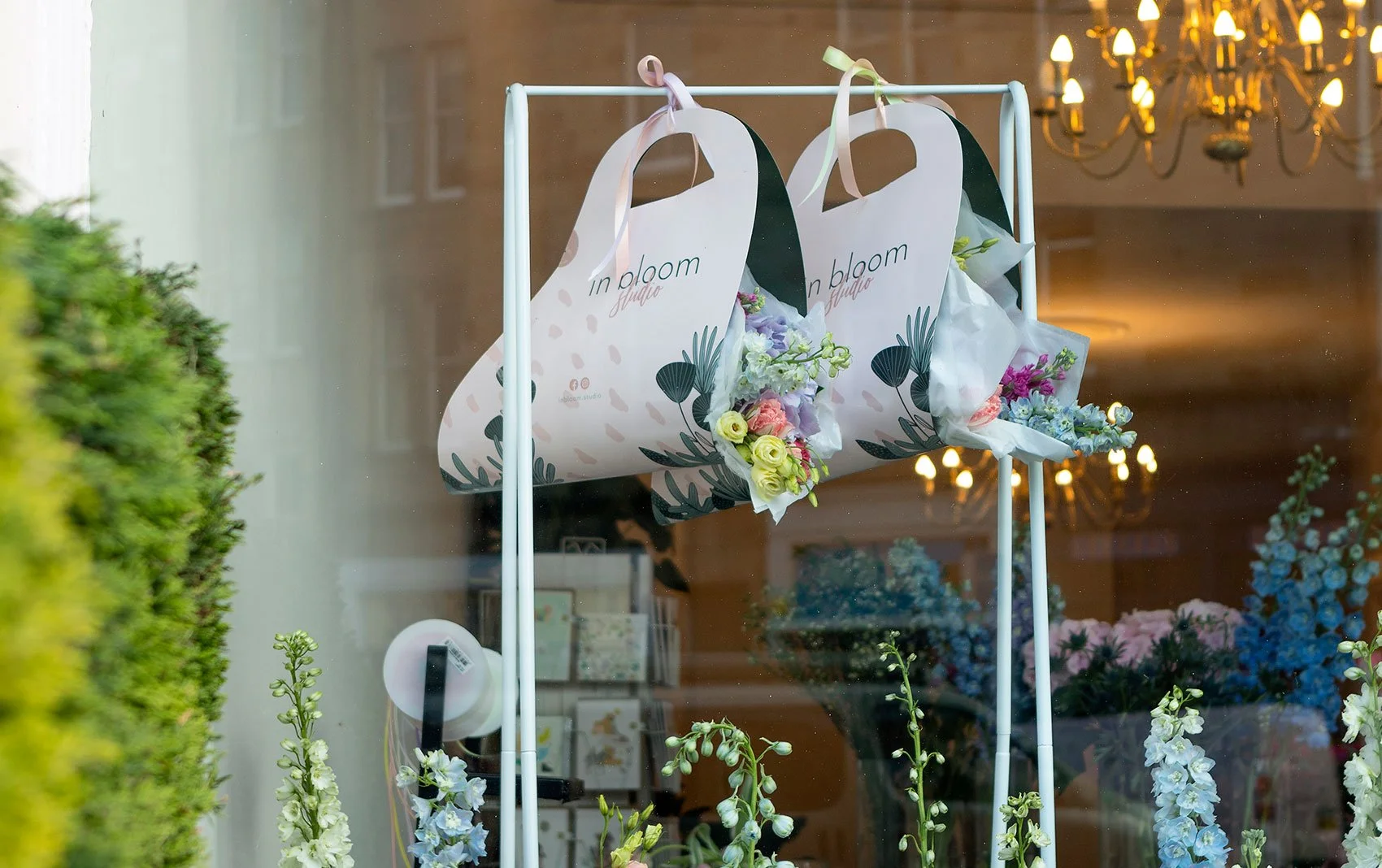
It might be the label on a bottle, tissue inside an order, a printed sleeve, sticker, swing tag or insert. Beyond the packaging itself, there may be menus, leaflets, booklets, point-of-sale materials or other printed pieces that continue the same brand experience.
What is so important is that they all feel like part of a family and have been designed for their purpose, rather than simply having a logo dropped onto each one.
Good packaging earns its place
Ultimately, good packaging has several jobs to do in one go. It needs to protect and contain the product. It needs to communicate the right information. It should feel recognisably part of the brand, work within realistic production constraints and make sense for the customer encountering it.
It goes without saying that of course we like it to look beautiful too whilst doing all of these practical things. That's why we approach packaging from the product out, rather than the logo in.